


Deep Learning Approach for Urban Mapping and Analytics
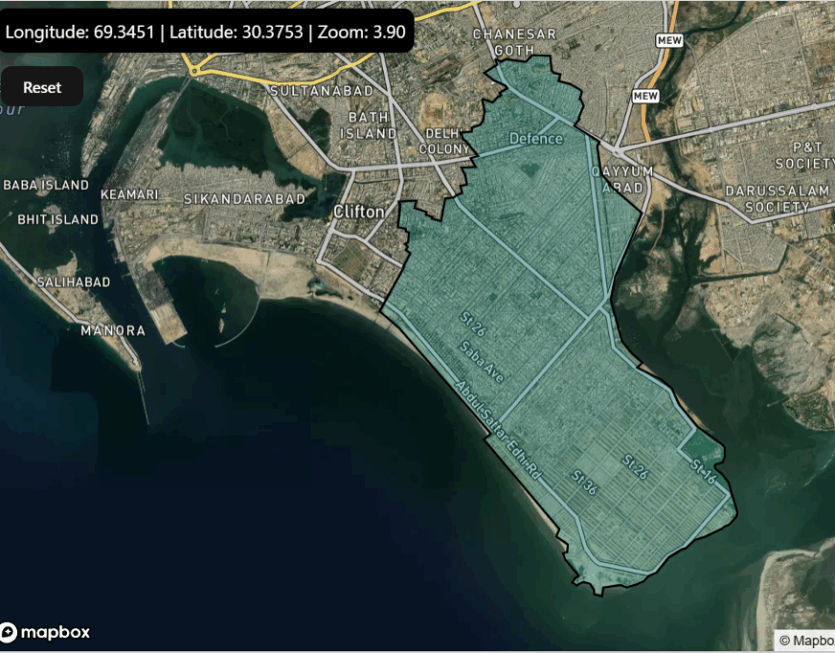
This project is an AI-powered web application that analyzes satellite imagery to detect vegetation coverage, urban heat islands, air quality, and high-rise buildings in rapidly growing cities. By combining data from Sentinel-2, Sentinel-5p, and Landsat-8 with advanced computer vision models (including Segment Anything Model – SAM), the system supports sustainable urban planning and environmental monitoring in Pakistan and beyond.
Purpose:
- Provide timely and accurate insights into greenery coverage, urban density, and pollution levels.
- Detect high-rise developments, thermal hot zones, and smog-affected regions.
- Reduce the need for manual satellite image interpretation.
- Enable plantation planning, zoning, and infrastructure management.
Who Uses It:
- Urban Planners & Authorities: Access updated maps to guide zoning and green initiatives.
- Environmental Agencies: Monitor smog, air pollution, and heat zones for public health action.
- Researchers: Analyze vegetation, land-use, and climate change impacts with enhanced data.
- Government Agencies: Plan sustainable city growth with accurate, geospatial intelligence.
Key Capabilities:
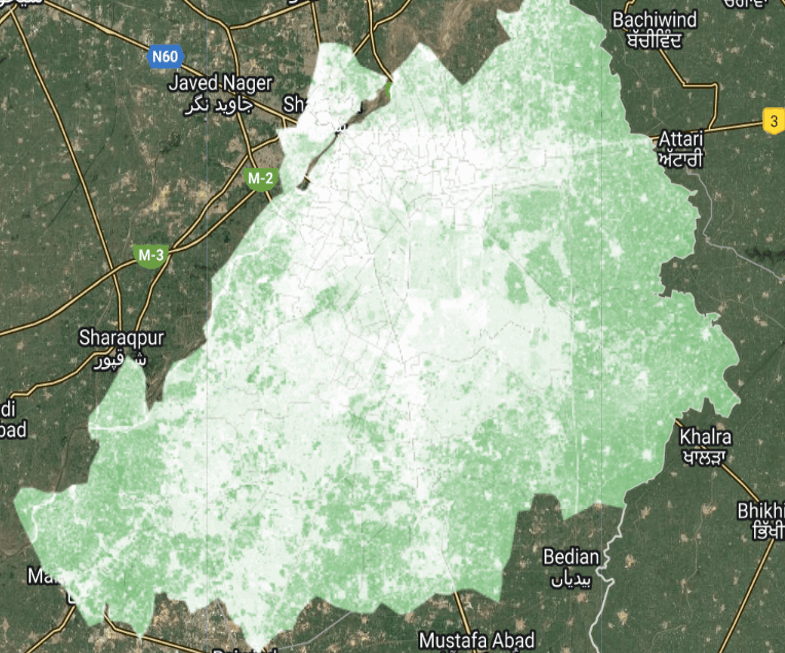
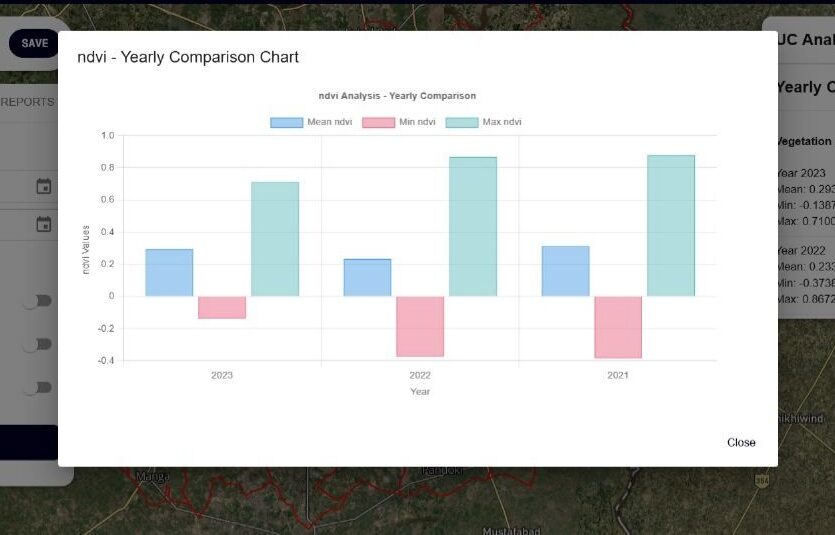
- Greenery Detection: NDVI-based vegetation health and density mapping.
- Air Quality Analysis: Computes AQI (NO₂, SO₂, CO, O₃) for Lahore’s Union Councils using EPA standards.
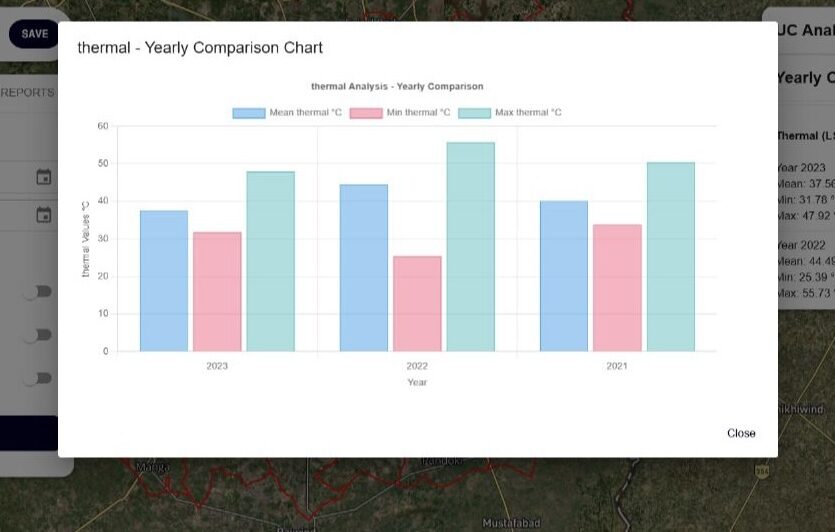
- Thermal Mapping: Land Surface Temperature (LST) analysis from Landsat-8 thermal bands.
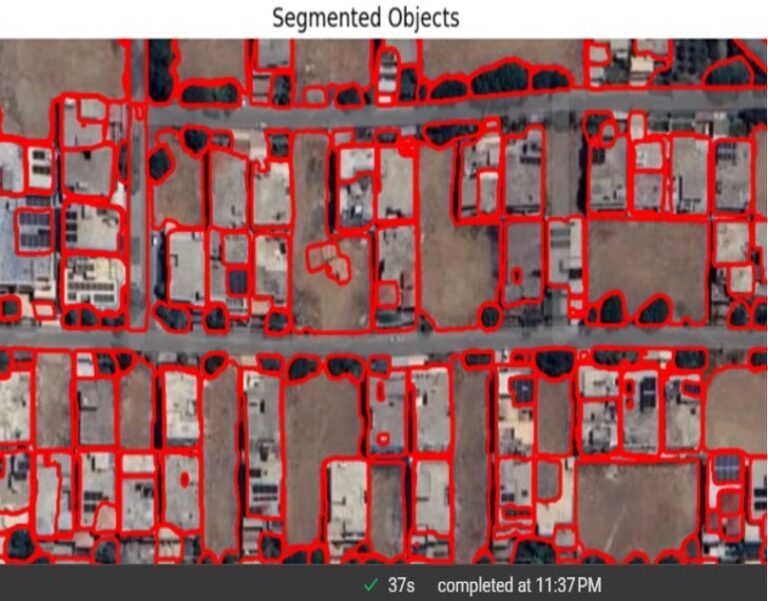
- High-Rise Monitoring: Uses SAM (Vision Transformer-based segmentation) to identify dense vertical development.
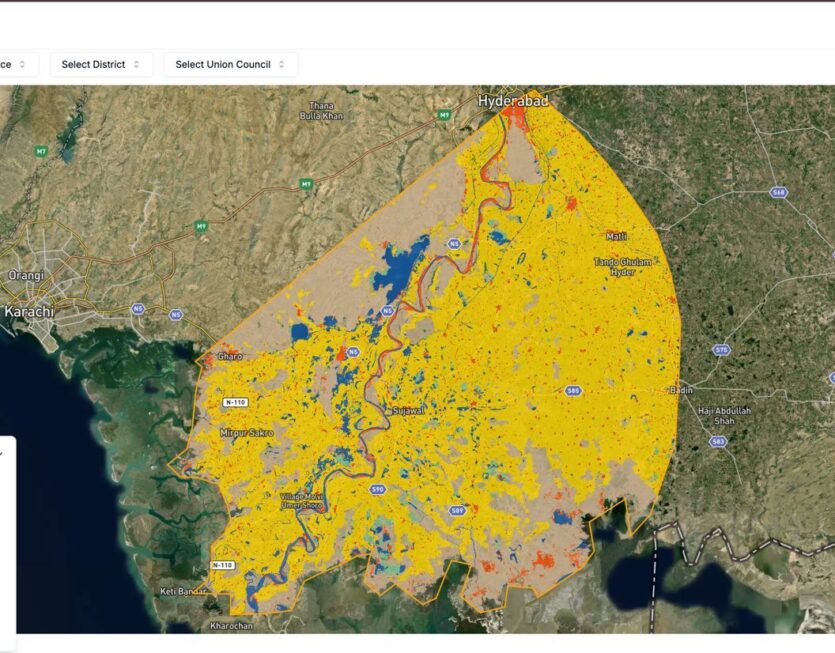
- Land Cover Classification: ESRI 10m Annual Land Cover data (2017–2023) to track urban expansion.
Mobile / Web App:
- Interactive Map View: Built with Mapbox GL JS for dynamic exploration.
- Custom Boundaries: Upload KML files or auto-generate boundaries for focused analysis.
- Project Management: Users can create projects, run analyses, and download reports.
- Responsive UI: Built with Next.js, Tailwind CSS, and ShadCN components for a modern experience.
- Secure Access: JWT-based authentication with role-based user management.
Typical Workflow:
- Acquire: Ingest Sentinel-2, Landsat-8, and Sentinel-5p imagery.
- Process: Apply filtering, normalization, and clipping by administrative boundaries.
- Analyze: Run greenery, air quality, heat, and building density analyses.
- Visualize: Display results as interactive maps and analytical dashboards.
- Report: Generate downloadable PDF/CSV summaries for authorities and stakeholders.
Governance & Data Integrity:
- Authentication: JWT ensures secure login and API requests.
- Traceability: Reports include timestamps, boundary references, and metrics.
- Consistency: Standardized preprocessing (min-max normalization, QGIS clipping) ensures reliable comparisons.
Outcomes & Value:
- Faster, automated analysis of satellite imagery for urban planning.
- Improved transparency in zoning and environmental monitoring.
- Actionable intelligence for plantation drives, smog control, and infrastructure planning.
- Scalable solution for other cities facing rapid urbanization.